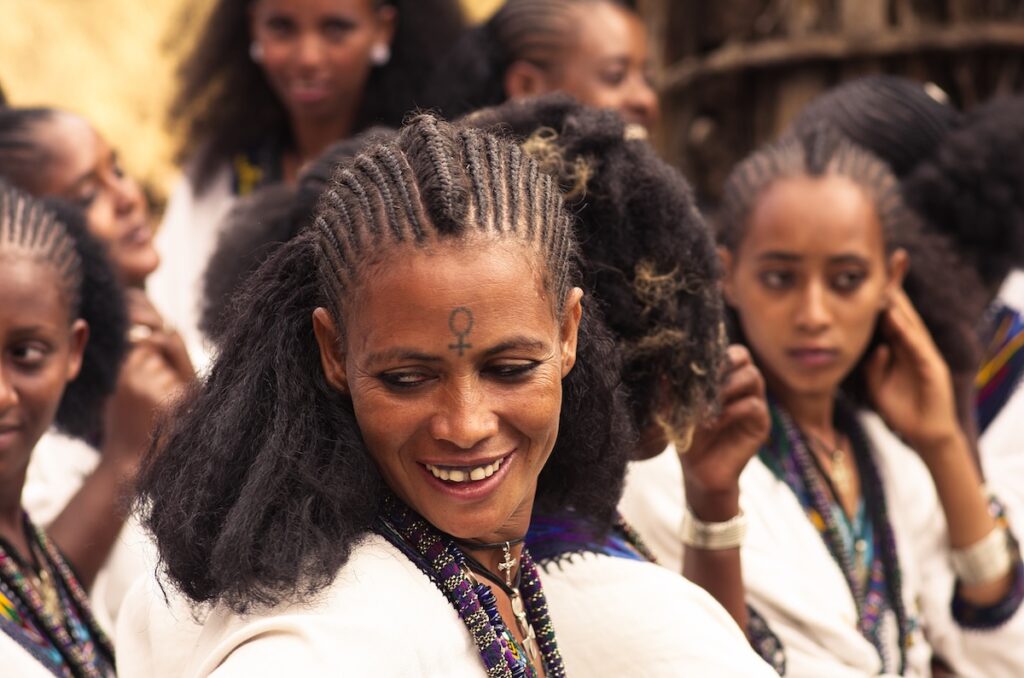
In Ethiopia, hair is more than aesthetics—it conveys ethnic identity, age, social status, and sometimes marital status. Each ethnic group has unique hairstyles shaped by centuries of tradition, creativity, and symbolism although the day-to-day style is often two simple braids, or cut short. The following is a broad analysis of the different styles found around the country although there are many more intricacies especially among the Harari, Afar, and Somali groups.
Northern Ethiopia (Tigray & Amhara)
Shuruba styles here often include elaborate braiding and threading.
Women sometimes use butter, ochre, or natural oils to style and maintain their hair.
Common patterns include thin braids arranged in geometric designs, often extending from the crown down to the back of the head.
Married women may wear more intricate, time-intensive styles, while younger girls often have simpler braids or cornrows.
In Gojjam, the most common hairstyle is clean cut.
Oromo
Oromo hairstyles are highly symbolic and vary between clans.
Shuruba can include twists, coils, or top-knots, sometimes adorned with beads, feathers, or cowrie shells.
During ceremonies like weddings or coming-of-age rituals, hairstyles communicate status, age, or readiness for marriage.
Southern Ethiopia (Gurage, Sidama, Hadiya)
Hair is often braided into thick plaits or wrapped around the head in circular patterns.
Decorations such as metal rings, beads, and colorful threads are common.
Among some groups, women’s hairstyles signal social hierarchy within the community.
Omo Valley Tribes (Hamar, Mursi, Karo)
Hairstyles are elaborate and artistic, often combined with body painting or scarification.
Hamar women, for instance, coat their hair with red ochre mixed with butter, creating a striking orange-red appearance.
Men may wear braided or shaved patterns to indicate warrior status or tribal affiliation.
Cultural Significance
Identity & pride: Hairstyles act as visual markers of ethnicity and personal style.
Rites of passage: Certain styles mark adulthood, marriage, or social milestones.
Protection & care: Oils and butter used in styling also nourish hair in Ethiopia’s varied climates.
Sources: https://lookosm.com/traditional-ethiopian-hairstyles/?utm_source=chatgpt.com
https://neemwoodcomb.in/blog/ethiopian-fashion-hairstyle/?utm_source=chatgpt.com
https://en.sewasew.com/p/hairstyles?utm_source=chatgpt.com
https://zagolethiopiatours.com/culture.html?utm_source=chatgpt.com