
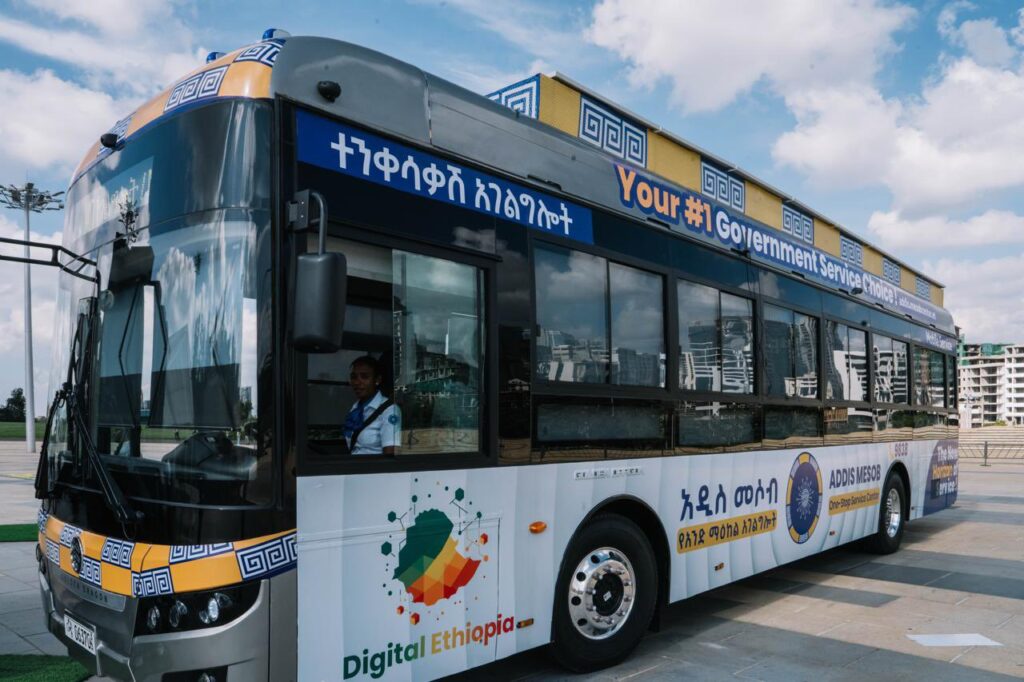
In Addis Ababa, mobile buses are emerging as an innovative way of delivering public and private services directly to communities. These specially equipped vehicles function as moving service
centers, bringing essential services closer to people and reducing the need to travel long distances to fixed offices.
One of the most notable developments is the introduction of smart mobile buses that serve as government service hubs. Recent initiatives in Addis Ababa include electric buses designed as “mobile one-stop centers,” offering services such as documentation, digital ID processing, and citizen support in both high-traffic and underserved areas.
Beyond government services, mobile buses are also expanding into healthcare and community outreach. Mobile clinic models have long been used to provide medical care in areas with limited access, acting as “doctor’s offices on the move” for vulnerable communities.
These innovations align with Ethiopia’s broader shift toward clean energy and electric mobility, supporting national goals for sustainability and reduced emissions. Electric bus systems are increasingly part of Addis Ababa’s urban modernization efforts, helping to power mobile services more efficiently while reducing environmental impact.
The rise of mobile buses represents more than transport innovation—it reflects a new urban strategy focused on accessibility, efficiency, and inclusion. Whether used for government services, healthcare, or community engagement, these mobile units are reshaping how services reach people in Ethiopia’s growing capital.
As Addis Ababa evolves into a smart city, mobile buses are becoming a symbol of a future where services move with the people, not the other way around.