
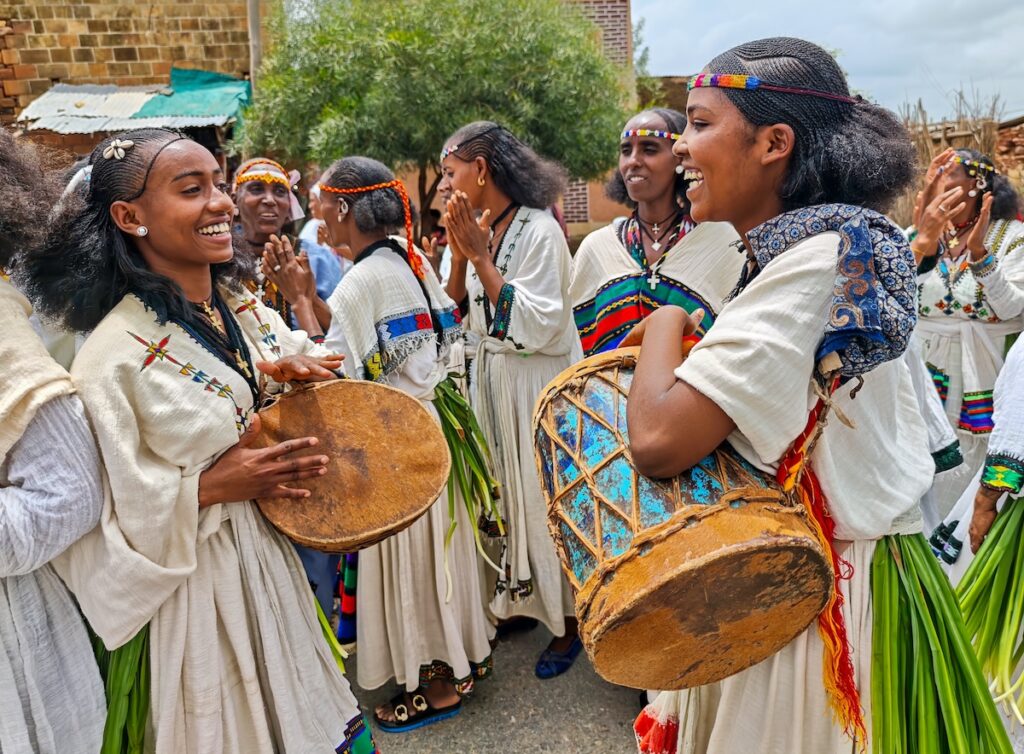
Every year, the highlands of Tigray come alive with music, color, and celebration during Ashenda — one of Ethiopia’s most vibrant cultural festivals. Celebrated mainly by girls and young women, Ashenda takes place after the Filseta fasting season in the Ethiopian Orthodox Tewahedo Church tradition.
The word “Ashenda” comes from a tall green grass that grows during the rainy season. Girls decorate themselves with this grass, symbolizing freshness, renewal, beauty, and growth. Dressed in stunning traditional white dresses embroidered with colorful patterns, they gather in groups to sing, dance, and move from house to house spreading joy and blessings.
More than a festival, Ashenda is a powerful expression of identity and freedom. For a few days, girls take center stage as their voices, creativity, and confidence are celebrated openly. Traditional songs preserve history, while dances and fashion showcase the richness of Tigrayan culture.
Families and communities warmly welcome the celebrations with food, gifts, and blessings, strengthening bonds between generations and neighbors. The festival also highlights the importance of unity, resilience, and cultural pride.
In recent years, Ashenda has gained international attention for its colorful traditions and empowering spirit. Yet beyond the beauty lies a deeper meaning: the celebration of womanhood, community, and hope.
Like the green ashenda grass that blooms after the rain, the festival represents life, renewal, and the enduring spirit of the people of Tigray.
sources
Africanews – Ashenda: Ethiopia’s uniquely female festival
Ethiopian News Agency – Ashenda: Ethiopia’s Multihued Intangible Heritage
Tigray Community Association – What is Ashenda?
Wikipedia – Ashenda
ResearchGate – The Art, Aesthetics and Gender Significance of Ashenda Girls’ Festival in Tigray