
Is Architecture Losing Its Soul?
Across the globe, architecture and design are increasingly dominated by a sterile, overly simplified aesthetic. What once was a meaningful minimalist movement has now become a shortcut—repeated, replicated, and reproduced at speed. Under pressure to build faster and cheaper, developers and designers are leaning on templated forms that lack context, identity, and cultural relevance.
We continue to copy what is easy: flat façades, generic palettes, and international styles that could belong to any city in the world. But in doing so, we risk eroding the very integrity of the profession. Architecture is not just about shelter or style—it’s about crafting spaces that reflect who we are, where we are, and how we live.
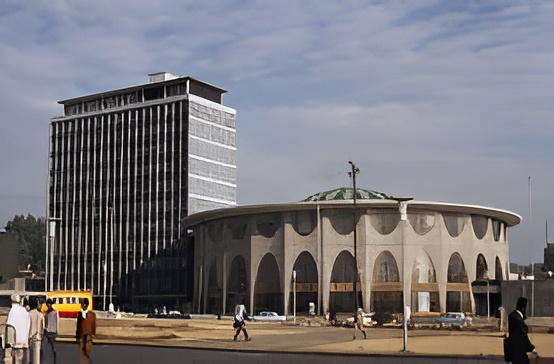
This loss is particularly visible when contrasted with the richness of older buildings that demanded skill, detail, and thought. Take, for example, the National Bank of Ethiopia—a striking example of modern Ethiopian architecture, designed by Chomette in 1965. A student of Le Corbusier, Chomette’s design combined modernist elements with local materials.
This is not just a local problem. It’s global. But the consequence is the same: a diminishing connection between people and place, between culture and craft.
But it doesn’t have to be one or the other. The future of architecture can be both refined and rooted. By blending today’s innovations with timeless craftsmanship and cultural sensitivity, we can design buildings that are efficient—yet full of meaning. Simplicity doesn’t need to erase identity. It can frame it.
By Nujuma Ibrahim
www.starboundcreations.com